6 of the best new beauty retail concepts
Whatever area of retail you work in, it’s always worth paying attention to what’s happening in beauty because some of the most interesting and inspirational concepts we see come from this sector. As we will now demonstrate.
Olive Young Beauty Mansion, Seoul, South Korea
This huge new four-floor flagship K-beauty space borrows from the department store design book to guide customers through the store.
Each floor has a number of shop-in-shop style spaces (described as rooms) which host a specific brand, product category, or service.
This breaks up the huge array of products on offer and makes navigation easier, as well as adding an element of privacy to services and treatments.
Rooms can be reconfigured as needed for brand pop-ups and takeovers. Using numbers to identify different rooms makes navigation easier and more flexible.
As with traditional department stores, Olive Young has also added non-selling spaces including an LP listening area and rest space with beauty books to increase dwell time.
Musinsa Beauty Hongdae, Seoul, South Korea
Musinsa has moved from fashion – where it is known for its ability to spot trends early – to beauty with this flagship concept, which includes a pharmacy floor in partnership with Onnuri Pharmacy.
Beauty and wellness have been blending more and more but this is an early example of pharmacy being added to the mix, turning it from utility to aspiration.
‘Pharmacy beauty’ is about applying trained expertise and diagnostic capabilities to beauty. Think pharmacist-led consultations for personalised recommendations with a focus on beauty, skincare and supplements rather than medicine.
Musinsa is also applying its status as a trend leader to the beauty floors of the store with a focus on lesser known and up-and-coming K-beauty brands. This makes it a destination for discovering the next big thing.
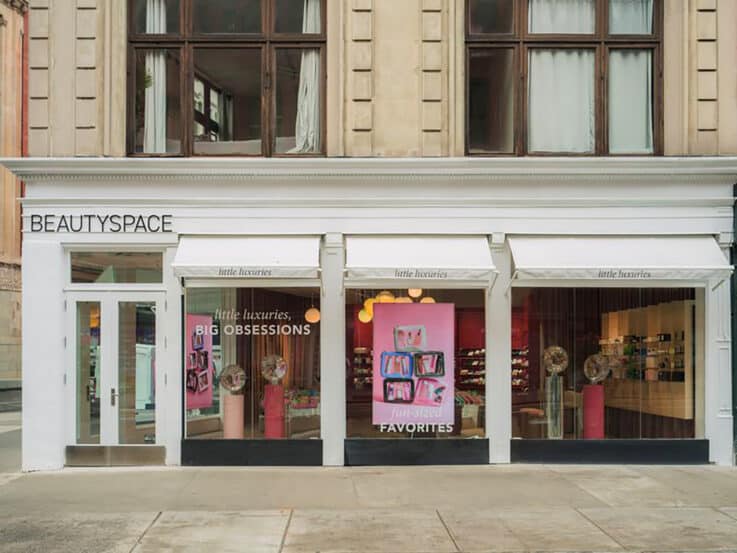
Beautyspace Little Luxuries, NYC, US
Beautyspace has turned beauty product minis into a dedicated physical store. Designed as a discovery space, Little Luxuries stocks mini-sized versions of prestige and luxury brands.
The concept taps into several key consumer trends, such as affordability (consumers are more likely to be able to afford a mini version of a luxury brand) and efficiency (customers want to know products work for them before they invest).
The store acts as a customer funnel for Beautyspace’s ecommerce platform. Members of its Rewards scheme can apply the value of a mini they buy at the store toward a full-size version on the Beautyspace website.
This omnichannel tie-up will no doubt provide Beautyspace and its partner brands with data about which products convert customers from trial to full purchase.
Primark/Pureseoul, UK
Earlier this year, Primark launched its own label K-beauty range, in response to massive consumer interest in this category. But it has also announced a new collaboration with Pureseoul, the UK K-beauty specialist, to add K-beauty Mini Marts to Primark stores.
This collaboration is a great example of how authenticity still matters when trends filter through to the mass market.
The Mini Marts will stock seven new product lines from established K-beauty companies that won’t be available elsewhere.
Primark is banking on Pureseoul’s reputation and the connection to established K-beauty firms to drive sales among a more discerning audience looking for authenticity.
There is also the chance of a boost in sales of Primark’s own label K-beauty products by association.
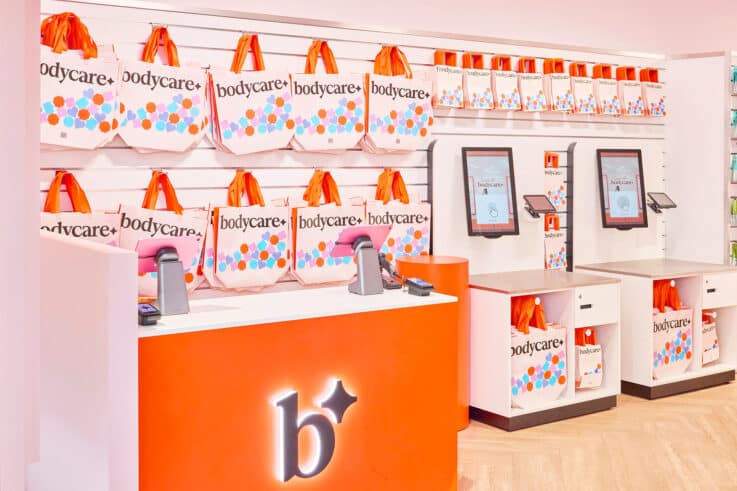
Bodycare, UK
Bodycare’s new redesign is another example of how premiumisation is infiltrating every part of retail, even the value end.
Together with Fold7Design, the brand is repositioning itself with a new modern, store concept that speaks to Gen Z and Alpha. The store layout and graphics take cues from the way customers discover products online, with less focus on fixed ‘mission’ shopping.
Plus, Bodycare are also handing over floor space to live broadcast studio capabilities, so the store can generate online media. What we like about this is that it’s accessible to local customers and creators – for free – rather than just reserved for influencers.
Also worth keeping an eye on is the AI-powered back end tech which analyses things like customer behaviour, pricing, stock levels and product trends in real time, which means Bodycare can change things up quickly.
Lancôme Qixi Love Record pop-up, China
This was one of those pop-ups that really taps into local celebrations and culture rather than being about product.
Running across three Chinese cities – Shanghai, Shenzhen and Zhengzhou – the pop-up was part of Qixi Festival 2026 celebrations, which is often described as China’s Valentine’s Day.
Yes, visitors could try on lipsticks and other Lancôme products, but the draw was the ability to record personalised voice messages and design their own album covers, which made lovely, personal gifts to give to a loved one.
At a time when someone can just generate some AI image or video, there’s something wonderfully intimate about the opportunity to capture and share your own voice and thoughts, and centering the customer over the brand.
This is just the tip of the iceberg. Discover inspirational retail in person with a retail safari.